
Whoa!
Solana’s transaction stream is relentless and raw, moving in bursts that feel almost like market data. My first impression was simple curiosity mixed with a little fear. Initially I thought an explorer’s role ended at pretty tables, but then I spent an afternoon tracing a stuck TX and realized how deep the tooling has to go. Something felt off about most dashboards—they surface numbers, but often hide the why behind a failed instruction.
Really?
Yes. Solana’s architecture creates both opportunity and confusion for users and builders. Blocks are short and confirmations rapid, so a single mis-signed or out-of-order instruction can cascade. On one hand, performance is delightful; on the other, debugging becomes a hunt through inner instructions and CPI calls. I’m biased, but that part bugs me—UI should help, not make you dig through logs like an archaeologist.
Hmm…
When I say « debugging » I mean tracing everything: signatures, message headers, program accounts, rent exemptions, and the order of instructions. You can watch a token swap, then see a bridge call, then an authorization that never completed. Actually, wait—let me rephrase that: it’s less about watching and more about connecting dots across program logs, pre- and post-balances, and inner instructions. My instinct said the best explorers would join these dots automatically, though actually few do it cleanly yet.
Here’s the thing.
Transaction status labels (processed, confirmed, finalized) matter more than most users realize. A « confirmed » tick can be reversed before finalization if a fork reorg happens within a few slots. That nuance is important for exchanges and high-value transfers, because the difference between fast UX and safe UX is often the choice of commitment level. On-chain analytics should show that history clearly, with timestamps and slot provenance so you know which fork produced the final state.
Okay, so check this out—
Explorers differ in how deeply they parse program logs. Some parse and display inner instructions. Some don’t. That sounds trivial, but inner instructions often contain precisely why a transaction failed: out-of-gas-like account rent issues, or CPI target misconfigurations. I traced a failed swap once where the outer instruction succeeded but an inner instruction failed due to a missing account; it was maddeningly hidden by basic explorers. (oh, and by the way… the UX could be a lot clearer here.)
Whoa!
RPC endpoints and rate limits shape what analytics can provide in real time. If your node is throttled, latency spikes and your explorer’s « live » feed becomes misleadingly stale. There’s also the big hidden cost: archival vs. recent state. Querying historical token transfer patterns requires archived snapshots that many free nodes don’t maintain. So when you look at on-chain history, ask: is this data coming from an archival indexer, or from a cached recent view?
Seriously?
Yep. Indexers are the unsung heroes. They stitch together accounts by owner, parse logs, decode events, and build token histories that make sense to humans. Without a robust indexer, you get raw transaction blobs and a lot of guesswork. I’m not 100% sure how every provider handles CPI sequences, but the good ones normalize them into a readable flow.
Whoa!
Let me walk through a practical flow I use. First I check the transaction signature and slot for timing context. Then I look at logs for program errors and inner instruction traces. Next I inspect pre/post token balances to see effective transfers, and finally I check account ownership and rent-exempt status. This order feels natural because it moves from surface to root cause, though sometimes you have to loop back when accounts are derived or PDAs are involved.
Hmm…
Program logs can be cryptic. They may print custom messages, but many programs emit raw bytes or base64 blobs that need decoding. A translator layer is very helpful for humans. That’s why explorers that decode known program events (token transfers, Metaplex metadata calls, Serum matches) are so valuable to both developers and investigators.
Where to look next and a recommended explorer
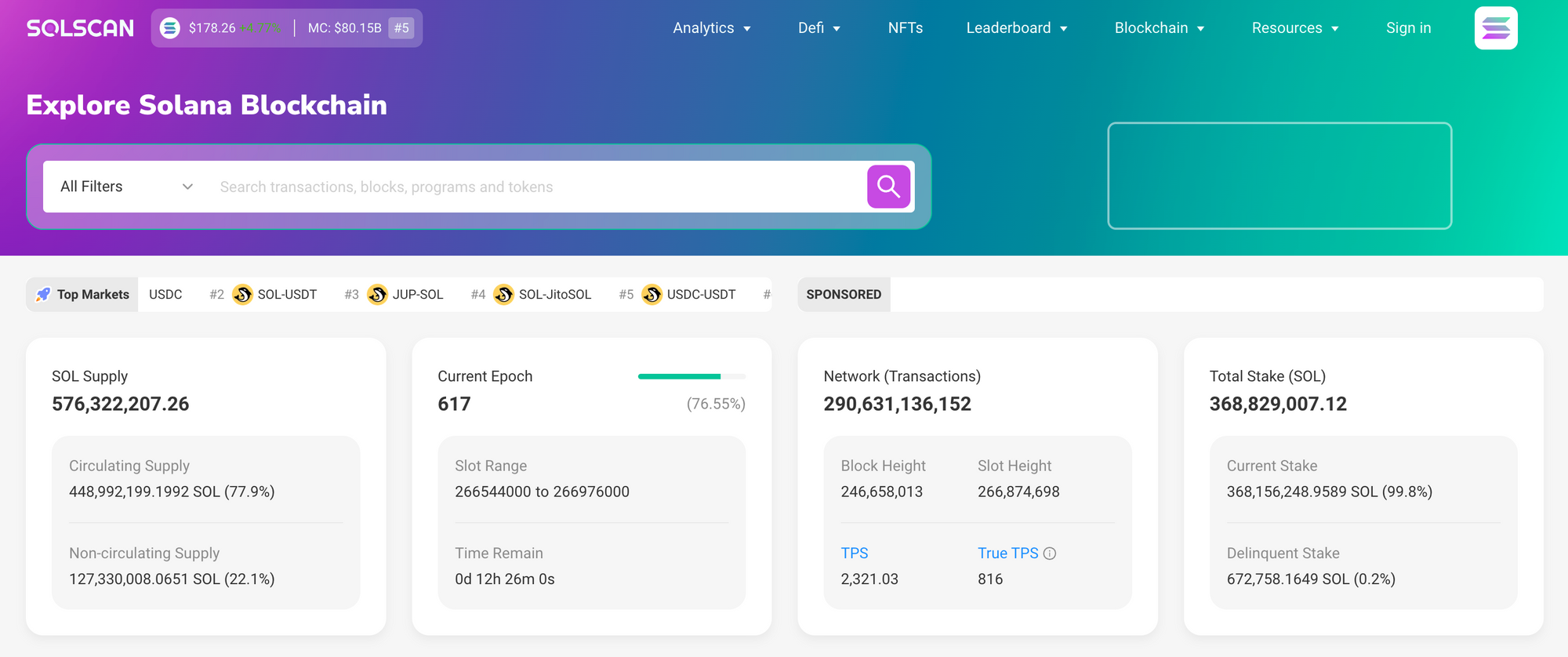
If you want hands-on tracing, try an explorer that surfaces inner instructions, CPI chains, detailed logs, and token movements in one panel. For a practical, real-world starting point, check out solscan which often shows transaction breakdowns, program logs, and token transfer graphs together in a single view. That single-click access to simulation outputs and error strings saved me a lot of time when I was troubleshooting transfer failures—really saved me from digging endlessly through raw RPC responses.
My instinct said the best practice is simple.
Use multiple tools. Cross-check a rapid feed against an archival indexer. Compare the same signature across explorers when things look off. On one hand, a single source of truth is convenient; on the other, redundancy catches inconsistencies before they become costly mistakes. Initially I trusted one explorer too much, and it cost me an afternoon—so now I habitually double-check.
Whoa!
Token transfers are deceptively complex on Solana. A single user action can spawn multiple token movements: fee transfers, wrapped SOL conversions, and intermediary program token escrow steps. Seeing only the visible transfers hides the economic effect. The right analytics layer sums these up, showing net token deltas per account, which is what you actually care about when auditing funds.
Really?
Yes, and watch for atomicity. Some transactions look like multiple independent transfers but are atomic—either all sub-instructions succeed or the whole message fails. That atomicity is what enables secure swaps and complex DeFi composability, though it also makes error messages harder to interpret when something reverts deep inside a CPI chain. Developers should simulate transactions locally—most explorers offer a simulation feature—and inspect the simulated logs before sending on mainnet.
Here’s the thing.
Fees are small but not trivial. In high-volume strategies, fees add up, and in congestion they spike. Monitoring fee patterns across time helps you decide when to batch transactions, when to move to a higher commitment, or when to reroute through a different program that is more gas-efficient. Analytics that surface median vs. 95th percentile fees per slot are especially useful for ops teams.
Okay, quick practical checklist—
1) Copy the transaction signature. 2) Check commitment and slot provenance. 3) Inspect logs and inner instructions. 4) Verify pre/post balances for all token accounts involved. 5) Cross-check with an archival indexer when history matters. This order isn’t gospel, but it works often enough to save time and headache.
FAQ
Q: How do I tell if a transaction was reorged?
A: Look at the slot and block hash, then check the finalization status and whether explorers disagree on finality. If one explorer shows a transaction as finalized and another doesn’t, you likely hit a fork or are looking at different commitment levels. Also check the parent slot history for reorg signatures.
Q: Why does an explorer show different balances than my wallet?
A: Possible causes include cached state, differing commitment levels, or missing indexed snapshots for derived accounts. Sometimes token accounts were closed and balance deltas are only visible in archival logs. Oh, and watch for wrapped SOL conversions—those can make balances look funny until you inspect native vs. token accounts.
I’m not 100% sure every edge case is covered here, and honestly there are new program patterns popping up all the time. But the core skill is the same: follow the signature, read the logs, check the balances, and don’t trust a single quick glance. Somethin’ about Solana makes you feel like you’re in the engine room—and that’s both thrilling and a little exhausting. So go poke around, but bring tools, patience, and a good explorer.