
Monitoring accounts payable and receivable, managing expense reports, and reconciling bank statements ensure that records align with actual financial activity. https://www.pro2col.co.za/what-is-accounting-rate-of-return-arr-formula-and-2/ This role often involves compiling data for monthly and quarterly reports, which are crucial for business assessment and strategy planning. It is a foundational accounting process, and developing strategies to improve core areas of your business would be nearly impossible without it.

Foreign Tax Credit
Bookkeeping focuses more on the administrative side of a business’s financial past and present, according to the Small Business Association (SBA). While on the other hand, accounting utilizes bookkeeper data and is much more subjective. SBA noted that a bookkeeper can provide basic day-to-day functions at a lower cost, but won’t possess the formal education of a CPA. This content is for information purposes only and should not be considered legal, accounting, or tax advice, or a substitute for obtaining such advice specific to your business. No assurance is given that the information is comprehensive in its coverage or that it is suitable in dealing with a customer’s particular situation. Intuit Inc. does not have any responsibility for updating or revising any information presented herein.
- Method of ACCELERATED DEPRECIATION, approved by the INTERNAL REVENUE SERVICE (IRS), permitting twice the rate of annual DEPRECIATION as the STRAIGHT-LINE DEPRECIATION method.
- A person entering into a short sale believes the price of the item will decline between the date of the short sale and the date he or she must purchase the item to deliver the item under the terms of the short sale.
- Bookkeeping involves recording daily financial transactions and maintaining accurate financial records.
- Arrangement in which the TRUSTEE has the authority to make INVESTMENT decisions and has control over investments within the framework of the TRUST instrument.
- Includes income derived from such sources as dividends, interest, royalties, rents, amounts received from personal service contracts, and income received as a beneficiary of an estate or trust.
- Amount, expressed as a percentage of total investment, that shareholders pay for MUTUAL FUND operating expenses and management fees.
Incremental Cash Flow

Acquisition of a controlling INTEREST in a company in a transaction financed by the issuance of DEBT instruments define bookkeeping by the acquired entity. Person or entity that has the right to use property under the terms of a LEASE. Agreement providing that portions of lease payments may be applied toward the purchase of the property under lease.
Forecasted Income Statement
An LLC is formed by filing ARTICLES OF ORGANIZATION with an appropriate state official. Owner of property, the temporary use of which is transferred to another (LESSEE) under the terms of a LEASE. Individual or firm that extends money to a borrower with the expectation of being repaid, usually with INTEREST.
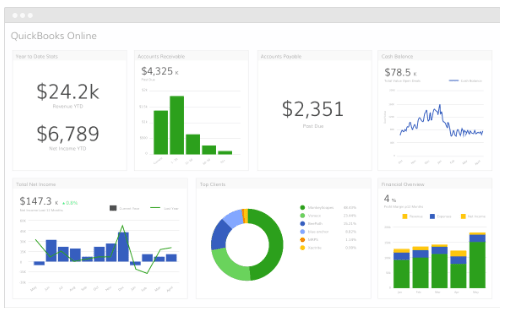
Bookkeeping is an integral part of accounting and largely focuses on recording day-to-day financial transaction of the business. Although bookkeeping procedures can be extremely complex, all are based on two types of books used in the bookkeeping process—journals and ledgers. A journal contains the daily transactions (sales, purchases, and so on), and the ledger contains the record of individual accounts. Bookkeeping involves the recording, on a regular basis, of a company’s financial transactions.
Price put on the time an investor has to wait until an INVESTMENT matures, as determined by calculating the PRESENT VALUE of the investment at MATURITY. In a valid tenancy-in-common, a deceased co-owner’s title passes to his or her heirs without being included in the estate of the deceased co-owner. Taxable income is generally equal to a taxpayer’s ADJUSTED GROSS INCOME during the TAX YEAR less any allowable EXEMPTIONS and deductions. Arrangement in which allowable tax deductions or EXCLUSIONS result in the deferral of tax on INCOME that would otherwise be payable currently. Charge levied by a governmental unit on income, consumption, wealth, or other basis. The simplest form of an ACCOUNT, shaped like the letter T, in which unearned revenue increases and decreases in the account can be recorded.
What is the Hourly Rate for Bookkeeping Services?
Excess of actual REVENUE over projected revenue, or actual costs over projected costs. Time granted by a taxing authority, such as the INTERNAL REVENUE SERVICE (IRS), a state or city, which allows the taxpayer to file tax returns later than the original due date. An AUDITOR that has a reasonable understanding of audit activities and has studied the company’s industry as well as the accounting and auditing issues relevant to the industry. Activities that involve management judgments or assumptions in formulating account balances in the absence of a precise means of measurement.
These professionals act like the financial noun of a business, ensuring accuracy in records and enabling informed financial decisions. They also employ tools like a thesaurus of financial terms to enhance clarity and consistency in documentation. Bookkeepers play a crucial role in managing finances efficiently and enable informed business decisions by utilizing synonyms to make complex financial terms accessible.